
yOUR CHALLENGES: REDUCE VULNERABILITIES, CREATE VALUE AND STRENGTHEN YOUR BUSINESS
The ecological transition, societal changes and economic developments are increasingly challenging business models, from value propositions and revenue streams to resource consumption, organisational structures and governance. Against a backdrop of pressure on certain resources, dependencies on suppliers, technologies or geographical regions, and growing concerns over strategic autonomy, your business model’s ability to adapt is also becoming a key factor in resilience.
For some businesses, gradually improving existing practices is no longer enough. They need to rethink how they create and share value while reducing their vulnerabilities. How can you evolve your business model while maintaining economic viability? How can you secure the resources and skills needed for your development? How can you better integrate environmental and societal considerations into your strategy and turn them into drivers of differentiation and resilience?
These transformations may involve adapting your business model, value chain, products or services, as well as defining your corporate purpose or evolving your governance structure. The challenge is to develop a coherent roadmap aligned with your business activities, capable of creating value and building sufficient resilience to navigate future transformations.
OUR EXPERTISE AND SUPPORT
We help you evolve your business model and strengthen its resilience by combining economic performance, environmental considerations and robust value chains.
EVOLVE YOUR STRATEGY AND BUSINESS MODEL
- Analyse your current business model and identify transformation challenges.
- Explore new value propositions and more sustainable business models.
- Assess circular and use-based business models, such as the functional economy.
- Compare different scenarios and develop your transformation roadmap.
UNDERSTAND YOUR DEPENDENCIES AND STRENGTHEN YOUR RESILIENCE
- Identify the materials, components, technologies or strategic links that are critical to your business.
- Assess the main dependencies within your value chains and the associated risks.
- Explore opportunities for diversification, substitution, circularity, reshoring or changes to products and processes.
- Compare alternatives based on their feasibility, costs, benefits and risks.
STRUCTURE YOUR COMMITMENTS AND GOVERNANCE
- Develop a Corporate Social Responsibility (CSR) approach aligned with your strategy and define how it will be managed.
- Define your corporate purpose and social and environmental objectives.
- Support your transition towards becoming a société à mission (purpose-driven company under French law) and its long-term governance, including structuring support and mock audits.
TURN STRATEGY INTO ACTION
- Prioritise the measures to be implemented and develop a realistic roadmap.
- Identify relevant partners and, where appropriate, support feasibility studies or pilot projects.
The tANGIBLE BENEFITS FOR YOU, TODAY AND TOMORROW
- Strengthen the resilience of your business model in the face of long-term changes.
- Identify new opportunities for value creation.
- Reduce your most critical dependencies and make more secure transformation decisions.
- Align your strategy, commitments and governance.
CLIENT CASE STUDIES
Case study 1 : A manufacturer of equipment used particularly by agricultural professionals wanted to explore a functional economy model that would allow it to retain ownership of products placed on the market and better manage their end-of-life. The company had already developed solutions for collecting materials and reincorporating them into its manufacturing process.
As part of a study partially funded by ADEME, we assessed the opportunity, feasibility and implementation requirements of a new service offering that would enable users to quickly obtain a replacement product in the event of wear, thereby ensuring continuity of use. This model strengthened both the value delivered to customers and product circularity.
Case study 2 : As part of the development of a new European industrial value chain for a critical raw material, we contributed to assessing the project’s environmental impacts and demonstrating its contribution to strengthening the resilience and strategic autonomy of a key European value chain. Our work helped provide objective evidence of the project’s environmental benefits and incorporate them into the application submitted to a European funding body.
WHY CHOOSE US?

RECOGNITION AND RANKINGS
Rated “Excellent” in 2025 by décideurs Magazine in the “Corporate social responsibility” category

RECOGNISED BY THE EUROPEAN COMMISSION
One of our senior consultants is listed by the European Commission for work on updating the European list of critical raw materials.

AT THE HEART OF THE ECOSYSTEM
Regular collaboration with BRGM (French Geological Survey) on strategic raw materials, particularly through European projects.
Consultants
offices in France
projets per year
partners
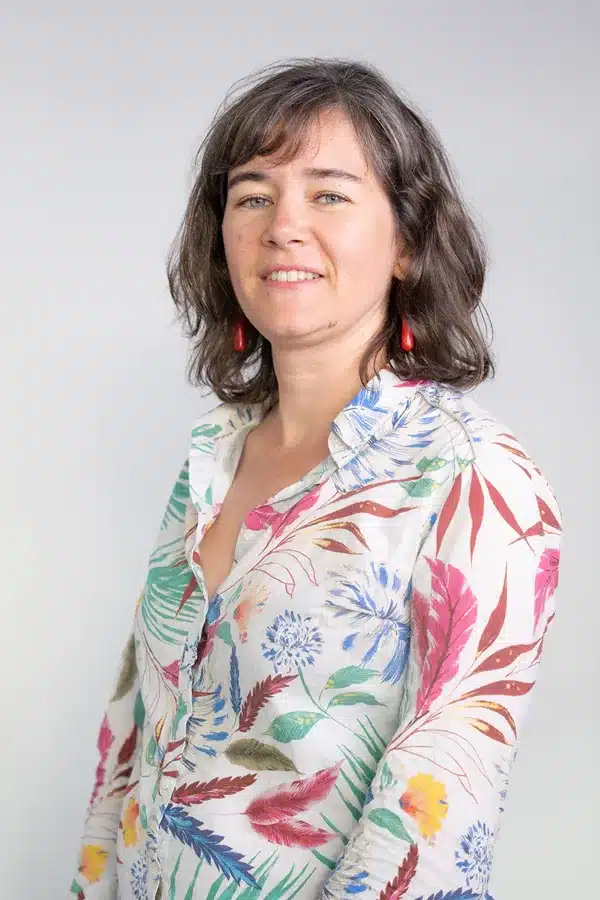
“Environmental and societal transformations can become powerful drivers of value creation and resilience when they are fully integrated into a company’s overall strategy.
The challenge is to translate this ambition into concrete decisions: development priorities, business models, investments, resources and funding requirements. This is the coherence we strive to build with our clients.”
Alice Deprouw, Director of Environmental Transition and Sustainable Policies

what our clients say
2026


Support in structuring and promoting the “Sustainable R&D-I” project

Research Tax Credit (CIR) support

2026